Texans home in on obstruction of justice, investigative methods in Mueller hearing
“Texans home in on obstruction of justice, investigative methods in Mueller hearing” was first published by The Texas Tribune, a nonprofit, nonpartisan media organization that informs Texans — and engages with them — about public policy, politics, government and statewide issues.
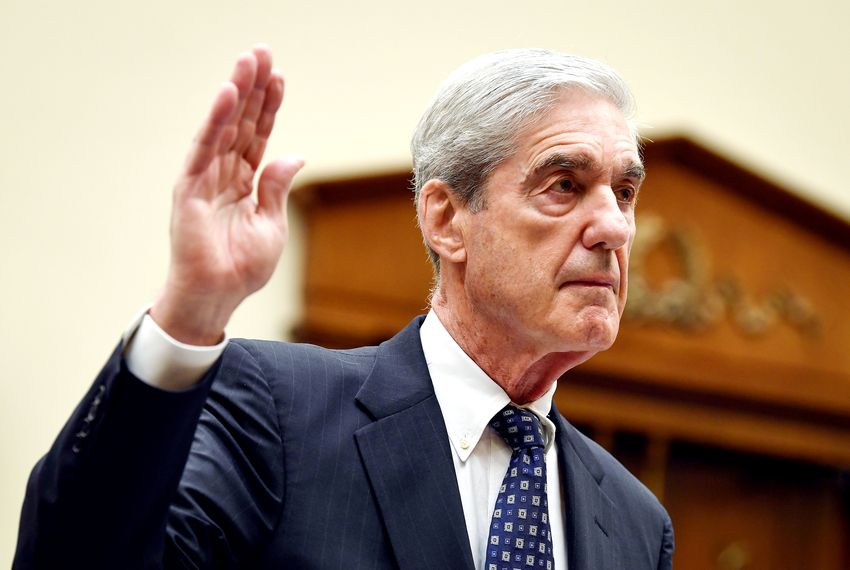
WASHINGTON — Former special counsel Robert Mueller told members of Congress on Wednesday that his nearly two-year investigation did not exonerate President Donald Trump of obstruction of justice.
But that conclusion prompted aggressive questioning from a Texas congressman early in Mueller’s highly anticipated day on Capitol Hill. At a hearing of the U.S. House Judiciary Committee, U.S. Rep. John Ratcliffe, R-Heath, argued it was out of bounds for Mueller to telegraph in his report that Department of Justice guidelines prevented him from indicting a former president.
“You made no decision,” said Ratcliffe, a former federal prosecutor. “You managed to violate every principle and the most sacred of traditions about prosecutors not offering extra prosecutorial analysis about potential crimes that aren’t charged.”
“Donald Trump is not above the law,” he added. “He’s not. But he damn sure shouldn’t be below the law.”
Neal Katyal, a former acting solicitor general in President Barack Obama’s administration, disagreed on Twitter.
“Ratcliffe dead wrong about the Special Counsel regs. I drafted them in 1999,” Katyal wrote. “They absolutely don’t forbid the Mueller Report. And they recognize the need for a Report ‘both for historical purposes and to enhance accountability.'”
Ratcliffe, a close ally of Trump, is under consideration for a job in the president’s administration, according to a CNN report this morning, including national security openings and the job of Dan Coats, the director of national intelligence.
During the hearing, Mueller faced a barrage of questions from lawmakers in both parties, including Texans. Subjects ranged from Mueller’s methods and conclusions to the limits of his authority. Mueller investigated Russian interference and other issues related to the 2016 election for more than two years. His 448-page report, released in April, did not find “that members of the Trump Campaign conspired or coordinated with the Russian government in its election interference activities.
But Democratic lawmakers focused Wednesday morning on the issue of obstruction of justice. When Judiciary Committee Chairman Jerry Nadler asked, “Did you totally exonerate the president?” the former special counsel simply answered, “No.”
Meanwhile, U.S. Rep. Sheila Jackson Lee of Houston, asked, “Does obstruction of justice warrant a lot of time in jail if you were convicted?”
Mueller replied, “Yes.”
U.S. Rep. Sylvia Garcia, D-Houston, attempted to zero in on the indictment of Roger Stone, making her the first member of the committee to bring up the disgraced former Trump adviser who was arrested earlier this year in connection with Mueller’s investigation. Stone is facing seven felony charges of obstruction of justice, witness tampering and lying before Congress. Mueller declined to answer questions about the ongoing Stone indictment.
Garcia then shifted her line of questioning to stress the broader Democratic maxim that, “No one is above the law.”
“What if I had made a false statement to an investigator on your team? Could I go to jail for up to five years?” she asked.
“Yes,” answered Mueller, before venturing a rare joke. “Although, it’s Congress.”
U.S. Rep. Louie Gohmert, R-Tyler, rounded out the early morning questioning among more senior members of the committee. In his questioning window, he aimed to undermine Mueller’s credibility, raising questions about his friendship with former FBI Director James Comey, who was fired by Trump, and bringing up a point of contention he has raised before at Congressional hearings — text messages between two FBI agents that were critical of Trump as a candidate for president.
Mueller removed one of those agents, Peter Strzok, from the investigation upon discovery of the texts.
The last member up for questioning for the Judiciary Committee hearing was U.S. Rep. Veronica Escobar, D-El Paso. Escobar pressed Mueller on impeachment, attempting to elicit a response from him on the buzzword he had taken pains to avoid for much of the hearing.
Escobar quoted Mueller as saying that “the constitution requires processes other than the criminal justice system to formally accuse a sitting president of wrongdoing.”
“What processes other than the criminal justice system?” she asked. “Is that impeachment?”
“I’m not going to comment on that,” Mueller said.
The former special counsel dodged most of Escobar’s questioning and declined to give Democrats the impeachment approval many were looking for.
This article originally appeared in The Texas Tribune at https://www.texastribune.org/2019/07/24/texas-lawmakers-question-robert-mueller-capitol-hill-hearing/.
Texas Tribune mission statement
The Texas Tribune is a nonprofit, nonpartisan media organization that informs Texans — and engages with them — about public policy, politics, government and statewide issues.