Maverick County Has a Housing Problem Amid $8.9 Million Stashed in Maverick County Housing Finance Corporation’s Bank Account
Hi
By Jose G. Landa, Copyright 2026 Eagle Pass Business Journal, Inc.
Nearly one in four Maverick County residents experiences severe housing problems, a rate significantly higher than the Texas average, while the county now has something specifically created under state law to address affordable housing and residential development, the Maverick County Housing Finance Corporation with approximately $8.9 million in funds stashed in its bank account.
The 2025 County Health Rankings reported that approximately 24 percent of Maverick County residents experienced severe housing problems compared with 18 percent statewide.
The findings are significant because housing is more than a real estate issue.
Affordable, safe and stable housing can affect family finances, health, employment opportunities and the overall economic condition of a community.
That brings the Maverick County Housing Finance Corporation directly into the discussion.
The corporation was established in July 2024 under the Texas Housing Finance Corporations Act.
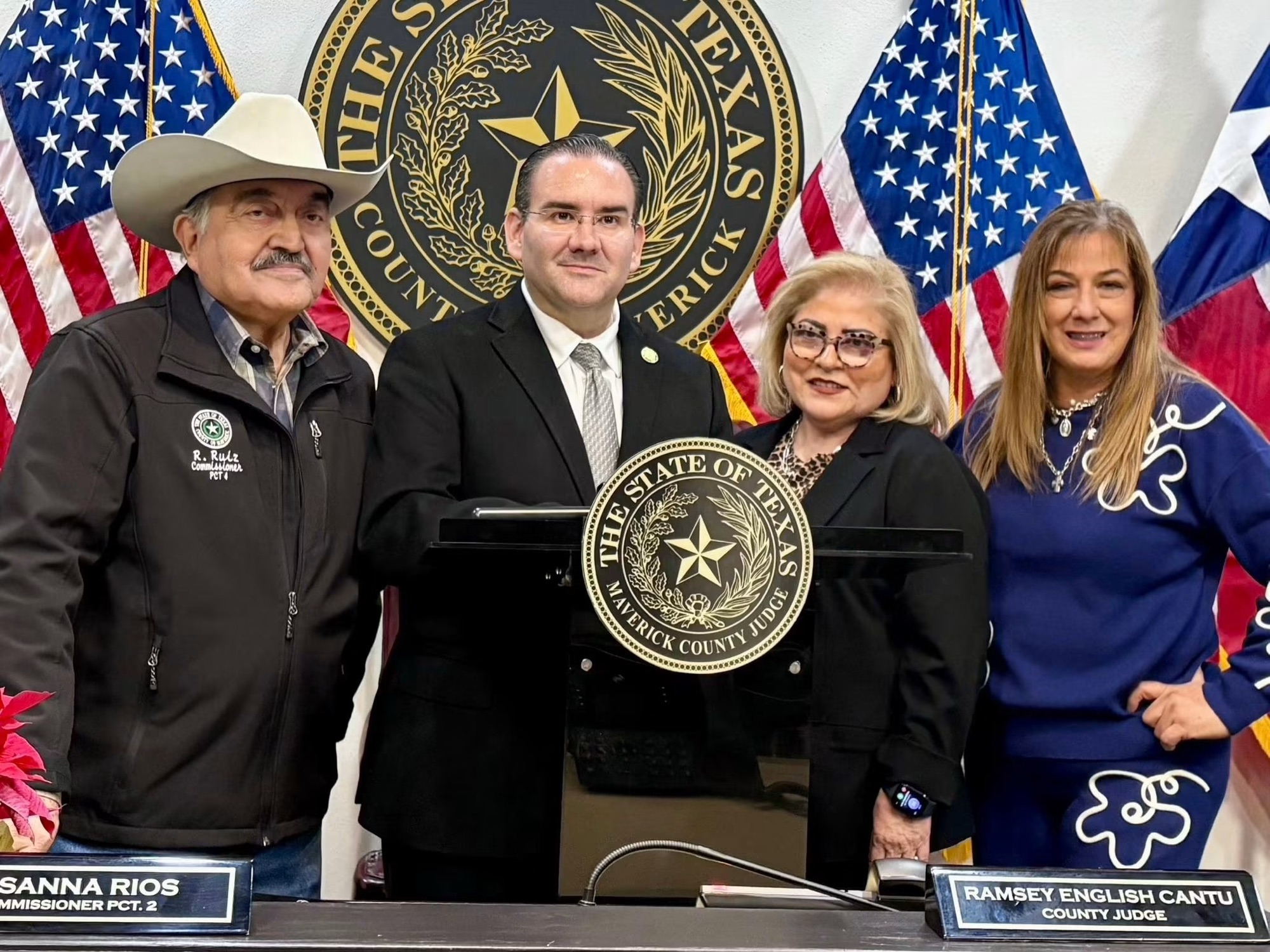
The MCHF Board of Directors includes former Maverick County Judge Ramsey English Cantu, Chairman; County Commissioners Roberto Ruiz, Vice-Chairman, Olga Ramos, Secretary-Treasurer, and Roxy Rios.
Texas Local Government Code Chapter 394 states that the purpose of a housing finance corporation is to help finance residential ownership and development providing decent, safe and sanitary housing at affordable prices.
State law goes further, recognizing that residential development promotes public health and welfare, encourages employment and economic development, helps prevent neighborhood deterioration and assists low- and moderate-income residents in obtaining affordable housing.
MCHFC purchased 29 private apartment complexes across Texas estimated to be valued at $1 billion and turned around and leased them back to the private developers for up to 99 years, taking them off the tax rolls of the communities, counties, school districts, and other tax entities where located. None of the 29 private apartment complexes were purchased in the MCHFC’s home county, Maverick.
During an MCHFC Board meeting Friday, September 4, 2026, Bond Counsel Arnold Cantu of Cantu Harden Montoya LLP explained that the HFC can “plan, research, study, develop and promote the establishment of residential development.” Board Vice-Chairman Roberto Ruiz presided over the meeting.
Cantu explained that the Maverick County HFC accumulated millions through partnerships with apartment developers.
Participating developers generally paid $300,000 when transactions closed and agreed to annual payments representing 10 percent of their property tax savings resulting from converting privately-owned tax paying apartment complexes into tax exempt-owned properties now owned by MCHFC.The money came from participating private developers rather than Maverick County taxpayers, according to Cantu.
Approximately $8,933,598 was identified during the September 4 meeting as being held in an account under Maverick County’s name. Cantu said the money belongs to the MCHFC but remained in the county-controlled account because of an “administrative error” caused the MCHFC fees deposited initially into his law firm’s trust account and subsequently into Maverick County’s bank account because it had not set up its own federal employer identification number and its own bank account. establishment of the corporation’s separate bank account.
The MCHFC was operated by and out of the Office of Maverick County Judge Ramsey English Cantu with the assistance of his former Administrative Assistant, Guillermina “Guillermo” Romero.
Not only did they not properly set up the MCHFC federal tax ID number and bank account, but they also failed to comply with Texas Secretary of State and/or State Comptroller legal requirements, but they allowed at least two of the 29 Limited Liability Corporations (LLC) owned by MCHFC to have their corporation charters forfeited by the State of Texas for noncompliance with state law.
The MCHFC Board unanimously approved at its September 4 meeting the request to the transfer the $8.9 million of funds from the county to the MCHFC bank account to rectify their “administrative error.” Board members Ruiz, Ramos and Rios voted in favor of the money transfer, while former County Judge and Board Chairman Ramsey English Cantu missed his second consecutive Board meeting. Ruiz explained that although former County Judge Ramsey English Cantu had resigned as county judge, he had not yet resigned from the MCHFC Board as of the September 4 meeting.
That does not mean the entire $8.9 million is immediately available for development of new affordable housing projects in Maverick County, because MCHFC has contractual obligations, legal expenses, several pending lawsuits against it, and other responsibilities that must be addressed and paid before touching those funds for local affordable housing projects.
But Maverick County’s housing statistics raise an important question about whatever resources ultimately become legally available.
Could those resources be used or leveraged to address affordable housing needs here at home? Yes, of course. And it is desperately needed in Maverick County.
Potential initiatives could include affordable apartment complexes, affordable homeownership, rehabilitation of deteriorating homes, affordable rental development, neighborhood revitalization or infrastructure supporting residential development.
The economic benefits could extend further.
Housing construction and rehabilitation can create work for contractors, electricians, plumbers, suppliers and other local businesses while improving neighborhoods and providing housing for the local workforce. According to economists, every $1 spent in Maverick County has an eight-fold economic impact in the community.
The health connection is equally important.
Families spending less of their income on housing potentially have more resources available for food, medicine, healthcare, transportation and other necessities.
Texas lawmakers recognized those connections when they created housing finance corporations, specifically linking residential development with public health, economic development and affordable housing for low- and moderate-income residents.
The Maverick County HFC has faced controversy over its out-of-county apartment partnerships, tax exemptions, litigation and millions of dollars generated through those transactions.
But the County Health Rankings identify a problem much closer to home.
Maverick County does not have to speculate about whether an affordable housing need exists. The data shows a significant housing problem.
And the county does not have to create an organization designed to address affordable housing.
It already has one.The question now is how the MCHFC’s legally available resources can ultimately be used or leveraged to fulfill that mission for the residents of Maverick County.